
Chapter 2
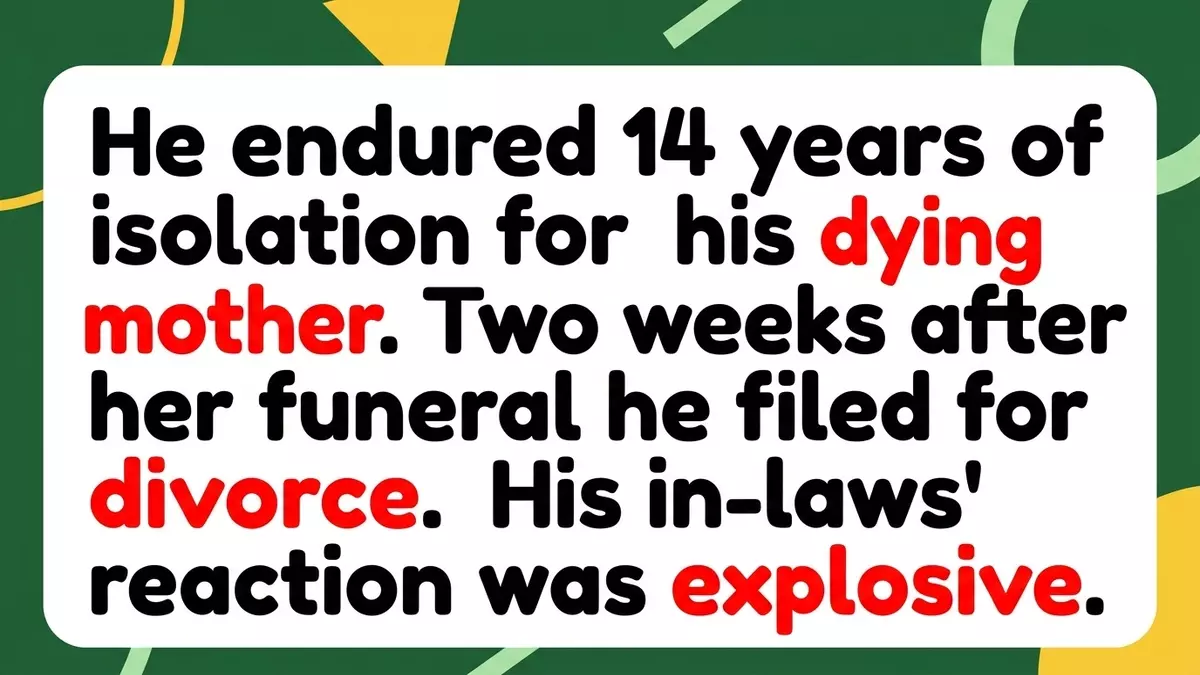
For fourteen years, the wife and her parents enjoyed the financial and domestic stability provided by the husband while treating him like an outsider. When the status quo was abruptly revoked, they labeled his departure a cruel, heartless "blindside," completely ignoring over a decade of ignored warnings, failed conversations, and clear signs of marital decay.
Reclaiming Life in Your Forties
Starting completely over in your early forties is undoubtedly a daunting prospect, but finding genuine peace after years of psychological exile is a powerful step forward.
For this husband, his sudden exit wasn't an act of malice; it was a necessary, calculated act of self-preservation. Upon filing, he immediately began executing a fresh trajectory:
-
A New Professional Space: Transitioning to a new job to establish financial independence away from the old household's influence.
-
A Personal Sanctuary: Moving into a new home where his voice is finally the defining authority.
-
New Companionship: Adopting a rescue dog, filling his new space with uncomplicated loyalty and mutual affection.
His story demonstrates that life does not simply grind to a halt after a difficult divorce—in many cases, it is the exact moment life truly begins.
Public Verdict: Fourteen Years is Not a Blindside
When the husband's calculated exit strategy surfaced in online discussion forums, the internet community came in hot and rallied firmly behind him.
The overwhelming consensus on platforms like Reddit completely rejected the wife's outrage. Commenters pointed out that fourteen years of constant isolation and systematic exclusion do not constitute a "blindside." Furthermore, online readers noted that the family's intense anger was likely driven by the sudden loss of financial security and domestic stability rather than genuine, unadulterated heartbreak. He was their foundation, and he simply walked away.
Conclusion: The Ultimate Timing of Self-Preservation
Navigating a home where you are permanently outnumbered requires an exhausting amount of emotional labor. While critics may argue about the sharp, sudden timing of his departure so soon after a family tragedy, his choice reflects a profound clarity. A loss unexpectedly became the catalyst for personal liberation. True charity and patience do not require you to remain a prisoner to a toxic dynamic forever, and sometimes, honoring a loved one means finally choosing to save yourself.
Frequently Asked Questions (FAQs)
1. Is it common for people to wait for a specific life event before filing for divorce?
Yes, it is a highly recognized strategy in family psychology. Individuals frequently delay a divorce to protect vulnerable loved ones. Common catalysts include waiting for children to turn 18 and graduate high school, waiting for a terminally ill parent to pass away, or waiting to secure independent employment.