
Chapter 2
From Requesting Cooperation to Assigning Blame
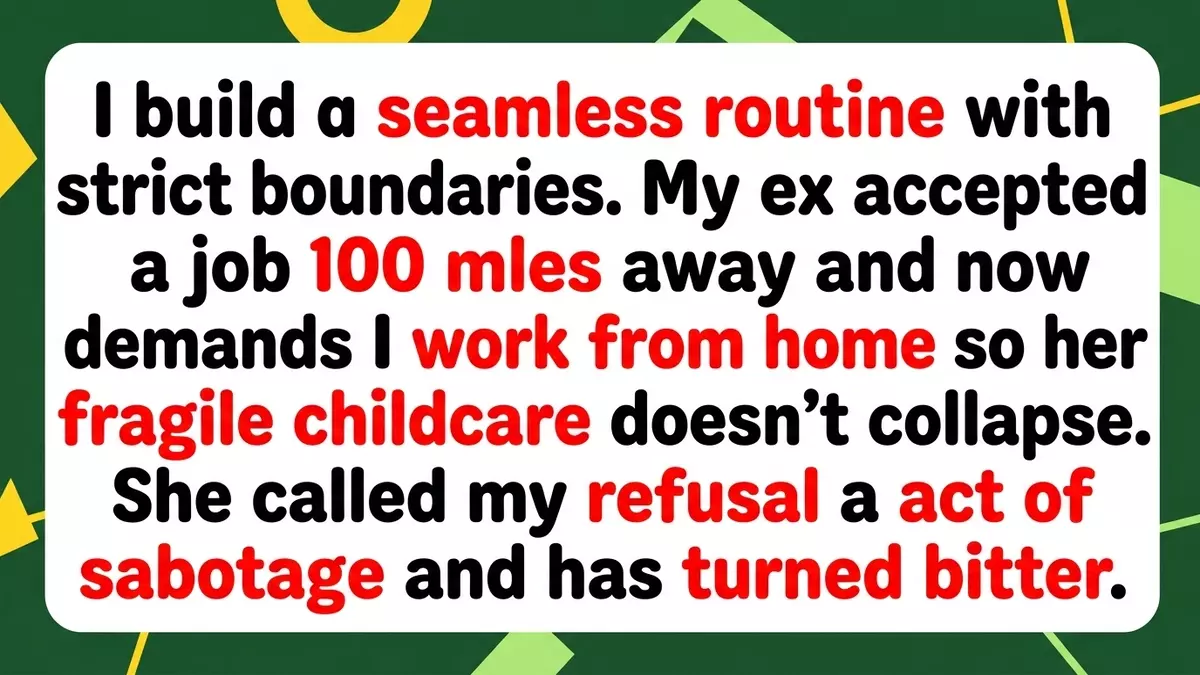
The core issue in this family feud lies in how the mother chose to handle her self-inflicted logistical crisis. Instead of asking for occasional emergency assistance, she explicitly demanded that the father transition to working from home three to four days every week. When he refused to jeopardize his own standing with his employer, the conversation quickly turned toxic.
From her perspective, she likely viewed the situation as a shared co-parenting obstacle rather than an individual career choice. She genuinely believed that both parents should alter their lives when circumstances change, especially if her new position provided better financial prospects for their daughter's future. However, there is a profound difference between requesting occasional flexibility and expecting a co-parent to permanently reorganize their professional life.
Mother's Perspective: "We both must change our schedules for the family future."
Father's Perspective:  "Your voluntary career move cannot dictate my job security."
When the father maintained his boundary, the mother shifted from seeking cooperation to assigning bitter blame. She accused him of intentional sabotage, framing his refusal as lingering resentment from their past relationship rather than a practical necessity to protect his own livelihood.
Expert Insights: Where Support Ends and Responsibility Begins
Family relationship experts and therapists frequently encounter this exact friction point in blended families and co-parenting dynamics. Legendary family therapist Virginia Satir once noted, "We must not allow other people’s limited perceptions to define us." The father’s refusal was aggressively framed as bitterness, but the objective facts present a picture of professional self-preservation.
| Co-Parenting Element | Mother's Action | Impact on Father |
| Decision Making | Unilateral 100-mile job change | Zero consultation or warning provided |
| Childcare Crisis | Fragile backup plan failed | Shfted the logistical burden to the ex-partner |
| The Demand | Remote work 3–4 days per week | Threatens father's workplace trust and career safety |
| Conflict Strategy | Accusations of bitterness and sabotage | Psychological pressure to force compliance |
Psychologists point out that the responsibility for making a new career arrangement function belongs primarily to the individual who chose it. While mutual support is ideal, one parent's voluntary lifestyle shift does not automatically create a legal or moral obligation for the other parent to compromise their own employment status.
The Internet Delivers a Unanimous Verdict
Seeking external perspective on the escalating hostility, the father shared his dilemma with an online community. The responses were overwhelmingly uniform, with the public firmly backing the father's decision to stand his ground.