
Chapter 3
Practical Strategies for Navigating Animal Conflicts in Public Places
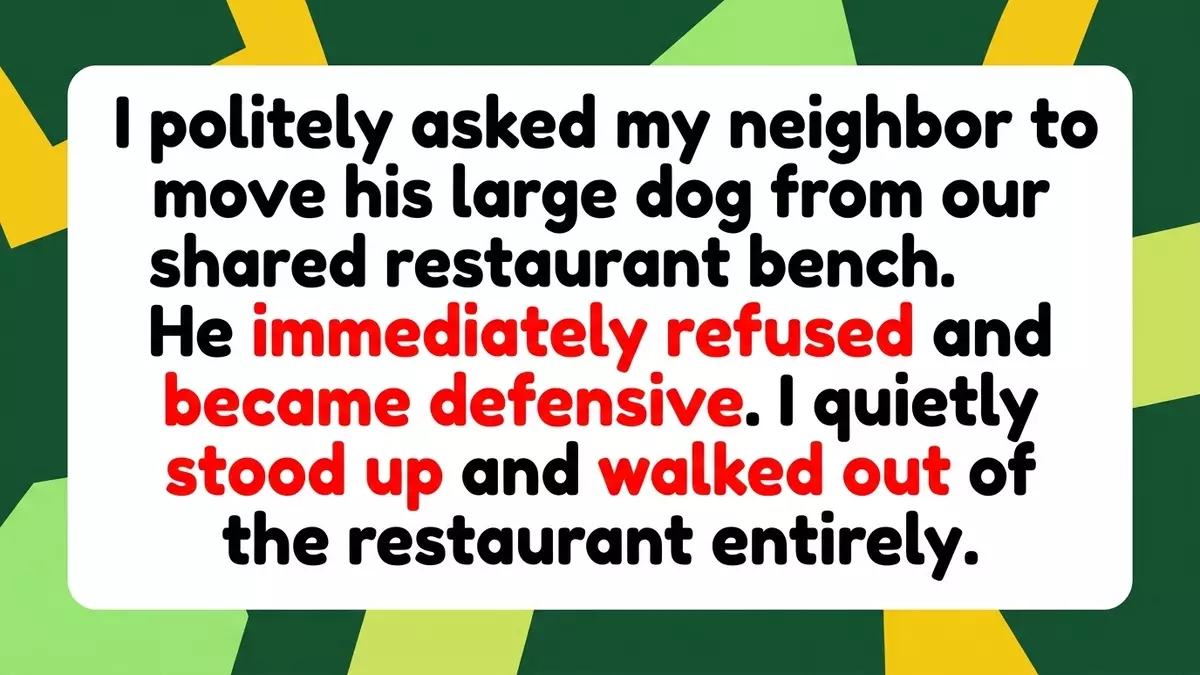
Sharing public spaces requires a delicate balance of empathy, awareness, and mutual respect. While accommodating disabilities is incredibly important, maintaining basic sanitation and respecting the physical boundaries of fellow human beings is equally vital to a harmonious community.
To handle these awkward situations without ruining your evening, keep these practical steps in mind:
-
Decline Direct Confrontation: Avoid engaging in a direct argument with a defensive pet owner. They are highly likely to become confrontational or attempt to gaslighting you regarding their rights.
-
Involve a Neutral Third Party: Quietly alert the restaurant manager or host. Use precise language: "There is an animal sitting directly on the dining furniture touching me, which violates local health codes."
-
Request a Table Realignment: If management is hesitant to confront the owner, protect your own peace by asking to be moved to an end-cap table or an alternative section of the dining room immediately.
Ultimately, clear communication and a firm adherence to public health standards are required to keep shared spaces comfortable for everyone. While a restaurant is obligated to welcome legitimate service animals, it is equally obligated to provide a clean, sanitary environment for its human guests. Standing up for your personal space isn't an act of intolerance—it's a basic expectation of public decency.
Frequently Asked Questions
Are service dogs ever allowed on restaurant chairs or booths?
No. Under the Americans with Disabilities Act (ADA), service animals are strictly prohibited from sitting on chairs, benches, booths, or tables in food service establishments. Seating is reserved exclusively for human patrons, and animals must remain on the floor at all times.
How can you tell the difference between a real service dog and a pet?
Legitimate service dogs are highly trained, focused entirely on their handler, and do not bark, whine, wander, or seek attention from strangers. Crucially, they are trained to lie quietly under the table or at their owner's feet, never on the furniture.
What should a restaurant manager do if a dog is sitting on a booth cushion?
A manager has the full legal right and obligation to tell the handler that the animal must be placed on the floor to comply with local health codes. If the handler refuses to cooperate or becomes disruptive, the manager is legally permitted to ask them to leave the establishment.
Why do health codes forbid animals from touching restaurant furniture?
Canines carry dander, dirt, bacteria, and allergens on their fur and paws that can easily transfer to fabric or leather seating. Because subsequent diners will sit in those same spaces—often while wearing shorts or skirts—keeping animals off furniture is a vital rule of public health.